No heat in a cold snap? Heating calls are answered 24/7 — gas furnaces and heat pumps.
📞 Call (325) 268-5114 Request a CallbackFurnace & Heating Repair · San Angelo, TX
Furnace Repair in San Angelo, TX
San Angelo winters are short — but when a cold snap drops overnight lows into the 30s and below, a furnace that sat idle for eight months is exactly when failures show up. Concho Valley HVAC‘s licensed technicians handle furnace and heating repair across the Concho Valley — gas furnaces and heat pumps, diagnosed on site, with straight answers.
Below: what a furnace repair involves, why furnaces so often die on the first cold night, the checks worth doing before you call, and the safety rules that are never optional with gas heat.
📞 No Heat? (325) 268-5114 Book a Fall Heating Check →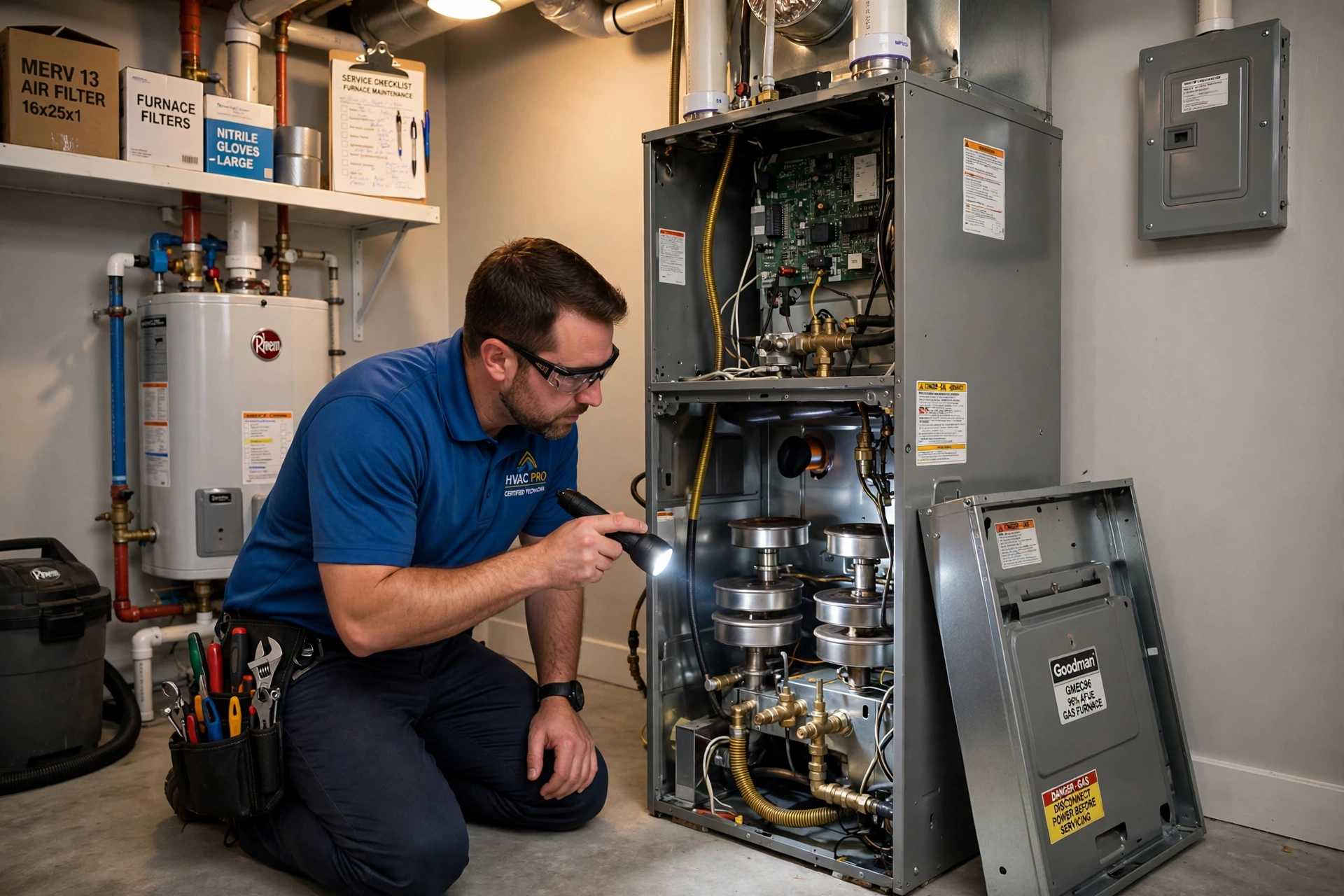
How Much Does Furnace Repair Cost?
What a furnace repair involves turns on which part failed. The most common first-cold-night fixes — flame sensors and igniters — are the smaller repairs. Control boards, gas valves, and blower motors cost more, and one repair (a cracked heat exchanger) usually means replacement instead, for safety reasons explained below.
The job is diagnosed on site and approved by you before any work begins — and if the repair doesn’t make sense for the age of your furnace, you’ll hear that too.
| Repair | What affects the job | Good to know |
|---|---|---|
| Flame sensor cleaning/replacement | A small part — cleaning is sometimes all it needs | The #1 cause of first-cold-night failures — oxidation after months idle |
| Igniter replacement | A small part; the part itself and access drive it | Furnace tries to start, clicks, then gives up? Often this |
| Control board replacement | Your brand, and whether the board is still made for your model | Erratic starts, blower that won’t run, or a totally dead system |
| Gas valve replacement | Your furnace model and its gas configuration | Licensed-tech only — never a DIY part |
| Blower motor replacement | Which motor your furnace takes, and its size | Wide range: standard motors at the low end, high-efficiency ECM motors at the top |
| Heat exchanger | A major component — furnace size and configuration drive it | A cracked exchanger is a carbon monoxide risk — on a 12+ year old furnace, replacement usually wins |
For context, weigh any big repair against the cost of a full furnace replacement, scoped for your home the same way — that’s the comparison that matters, and the repair-or-replace guide below shows how to use it.
Why Furnaces Fail on the First Cold Night
It’s the most common heating story in San Angelo: the furnace worked fine last March, sat idle for eight or nine months, and refuses to run the first night you actually need it. Local contractors see it every year — as one San Angelo company puts it, furnaces here “sit idle most of the year and can fail quietly the first cold night.”
The usual culprit is the flame sensor. All summer, its metal rod slowly oxidizes. When the furnace fires for the first time, the sensor can’t reliably detect the flame, so the safety control shuts the gas off — the furnace starts, runs a few seconds, and stops. The fix is cleaning or replacing the sensor — one of the smaller furnace repairs — and exactly what a fall heating check takes care of before the cold arrives.
Dust plays its part too — a season of West Texas dust settles on burners and blower parts that sat through summer, which is why dirty flame sensors and burners are behind so many early-season calls.
Furnace Won’t Turn On? Check These First
- Thermostat: set to “heat,” temperature above the room reading, fan on “auto.” Check batteries if the screen is blank.
- Filter: a clogged filter can overheat the furnace and trip its safety limit switch, shutting it down. Replace a matted filter.
- Breaker and furnace switch: check the panel, and the wall switch near the furnace (it looks like a light switch and gets turned off by accident more often than you’d think).
- Gas valve: if your gas water heater works, supply is fine. Never open up gas components yourself — if the furnace’s gas valve area smells of gas, stop and read the safety box below.
Blowing cold air instead? That usually means the burners aren’t lighting (igniter or flame sensor), the thermostat is set to fan-only, or the system is shutting down on a safety limit from poor airflow. The first checks are the same — then it’s a diagnosis call: (325) 268-5114.
Signs Your Furnace Needs Repair
- No heat, or air that never gets warm
- Short cycling — starts and stops every few minutes
- A loud boom at startup — delayed ignition, worth a prompt call
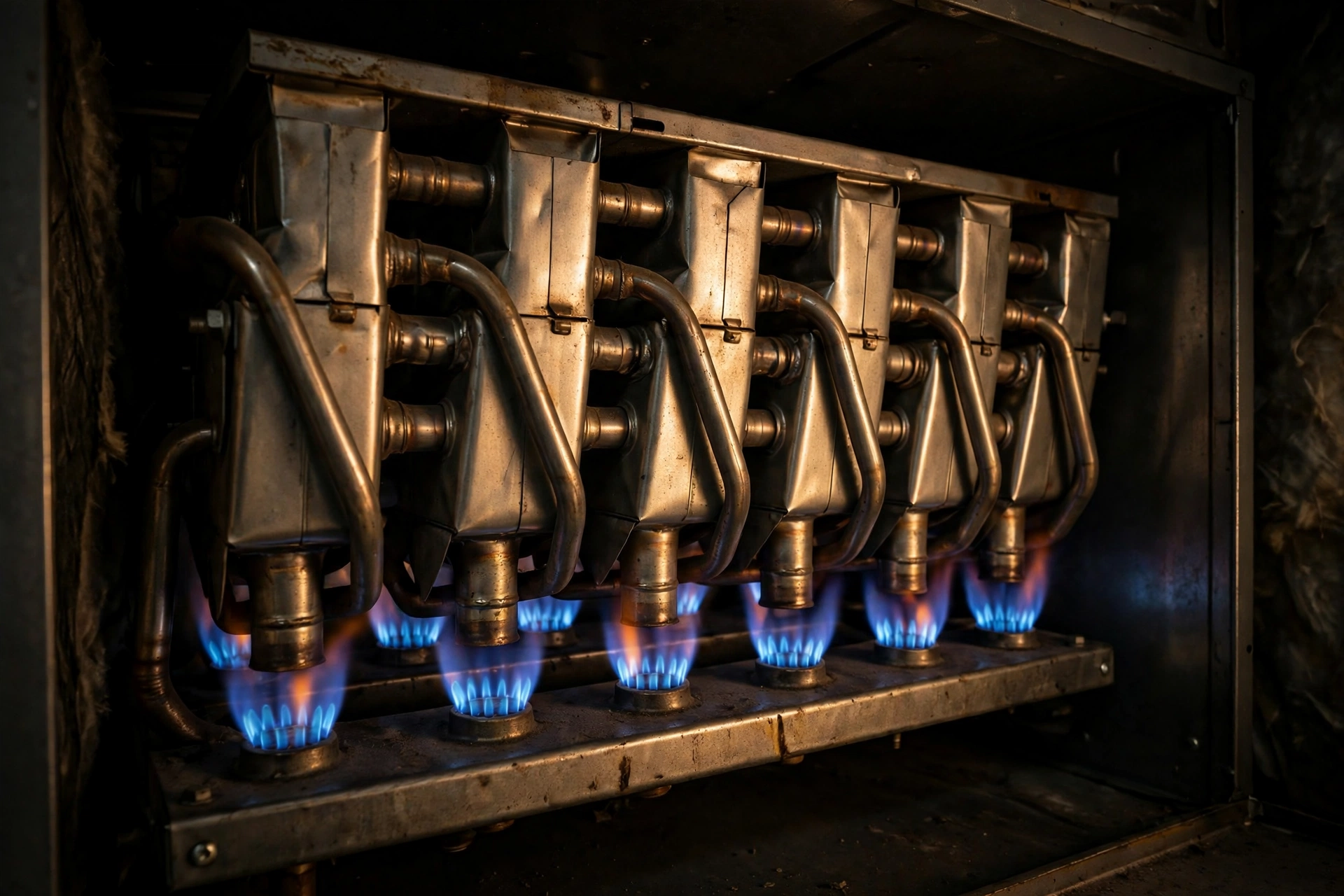
- Yellow or flickering burner flame — it should burn steady and blue
- Soot around the furnace or a rusty flue
- Gas bills spiking with no change in the weather
- Cold spots and rooms that never warm up
- Banging, rattling, or squealing that wasn’t there last winter
⚠ Heating Safety: the Rules That Are Never Optional
A cracked heat exchanger is dangerous — full stop. It can leak carbon monoxide into your home’s air, and CO is odorless and colorless. A furnace with a cracked exchanger must not be left running; on an older unit, replacement is usually the right and safe answer.
If your CO alarm sounds: get everyone outside and call 911. Don’t go back in to investigate.
If you smell gas: leave the house, don’t touch switches or phones inside, and call your gas utility (Atmos Energy) or 911 from outside. Every heating repair we do includes a combustion safety check — and working CO detectors on every floor are a must in any home with gas heat.
Heat Pump Repair, Too
Plenty of Concho Valley homes heat with a heat pump instead of a gas furnace — and yes, we repair them. The common winter heat pump calls are different from furnace calls: a stuck reversing valve (system cools when it should heat, or vice versa), defrost problems (outdoor unit icing up and never thawing), and auxiliary heat issues — when the backup heat strips don’t kick in on the coldest nights, or never turn off and quietly double your electric bill.
One normal thing that alarms people: on cold, damp mornings a heat pump periodically runs a defrost cycle and can puff a cloud of “steam” from the outdoor unit. That’s the system melting frost off itself — not smoke. If it happens constantly or the unit stays iced, that’s a repair call.
Furnace Repair or Replace?
- Under 8 years old: repair — almost always
- 8–12 years: judgment call — weigh the repair against remaining life
- 12+ years, or a cracked heat exchanger at any age: replacement is usually the smarter (and safer) spend
- Any age: if the repair costs more than about 40% of what a replacement would cost, replace
Your technician will lay out the repair and the replacement side by side. And the smartest move of all is timing: a fall heating check in October or November cleans the flame sensor and catches weak igniters before the first freeze has every contractor in San Angelo booked solid. It’s covered in our maintenance plans.
Furnace Repair FAQs
How much does furnace repair cost?
It depends on the part. The common ones — flame sensor, igniter — are the smaller repairs; control boards and gas valves cost more. Blower motors vary widely by type, and a heat exchanger usually points to replacement instead. The full job is explained after diagnosis and approved by you before work begins.
Why is my furnace blowing cold air?
Usually one of four things: the burners aren’t lighting (failed igniter or dirty flame sensor), the thermostat is set to fan-only or misconfigured, the filter is clogged enough to trip the high-limit switch, or — on a heat pump — the auxiliary heat isn’t engaging. The first two checks (thermostat, filter) take two minutes; the rest is a diagnosis call.
Is a cracked heat exchanger dangerous?
Yes. A cracked heat exchanger can let carbon monoxide into your home’s air supply, and CO can’t be seen or smelled. The furnace should not be run until it’s addressed, and on a furnace over 12 years old, replacement is usually the right answer rather than a major exchanger repair. If your CO alarm ever sounds, leave the house and call 911 first.
Do you repair heat pumps, or only gas furnaces?
Both. Many San Angelo homes heat with heat pumps, and we handle their winter failures too — reversing valves, defrost controls, and auxiliary heat problems — as well as gas furnace repair. One call to (325) 268-5114 covers either system.
How much does a new furnace cost?
A full furnace replacement is scoped for your home after it’s sized — what it involves depends on size, efficiency, and whether ductwork or gas/electrical work is needed. If your AC is the same age, ask about replacing both as a matched system — see our installation page for how that math works.
Can a fall tune-up prevent a mid-winter breakdown?
It prevents the most common one. A fall heating check cleans the flame sensor — the part whose summer oxidation causes most first-cold-night failures — tests the igniter, and checks combustion safety before the first freeze. Book it in October or November; see our tune-up page for what’s included.
What if I have no heat during a freeze — is that an emergency?
Yes. No heat during a freeze warning — especially with an indoor temperature dropping below 60°F, vulnerable occupants, or any risk of pipes freezing — is a heating emergency. Call (325) 268-5114 any hour; emergency calls are answered around the clock and prioritized by urgency, the same as our emergency service in summer.
Cold House? Warm Help Is One Call Away.
Licensed local pros for furnaces and heat pumps — 24/7, all winter.
📞 Call (325) 268-5114 Request a Callback